






Royal Holloway logo and departmental theme Royal Holloway, University of London


* Important Notice *

Due to so many pleas for extra time over Christmas, we have elected to extend the submission deadline (for all forums except the film festival) from 21st December to January 11th 2010.

Please note that this deadline will be firmly applied.

2010 European Conference of the Association for Consumer Research

Royal Holloway,
University of London
30th June-3rd July, 2010

Conference Co-chairs:
Alan Bradshaw, Chris Hackley & Pauline Maclaran, Royal Holloway, University of London

Film Festival Co-chairs:
Russell Belk, York University, & Robert Kozinets, York University

Doctoral Consortium Co-chairs:
Avi Shankar, University of Bath, & Markus Giesler, York University

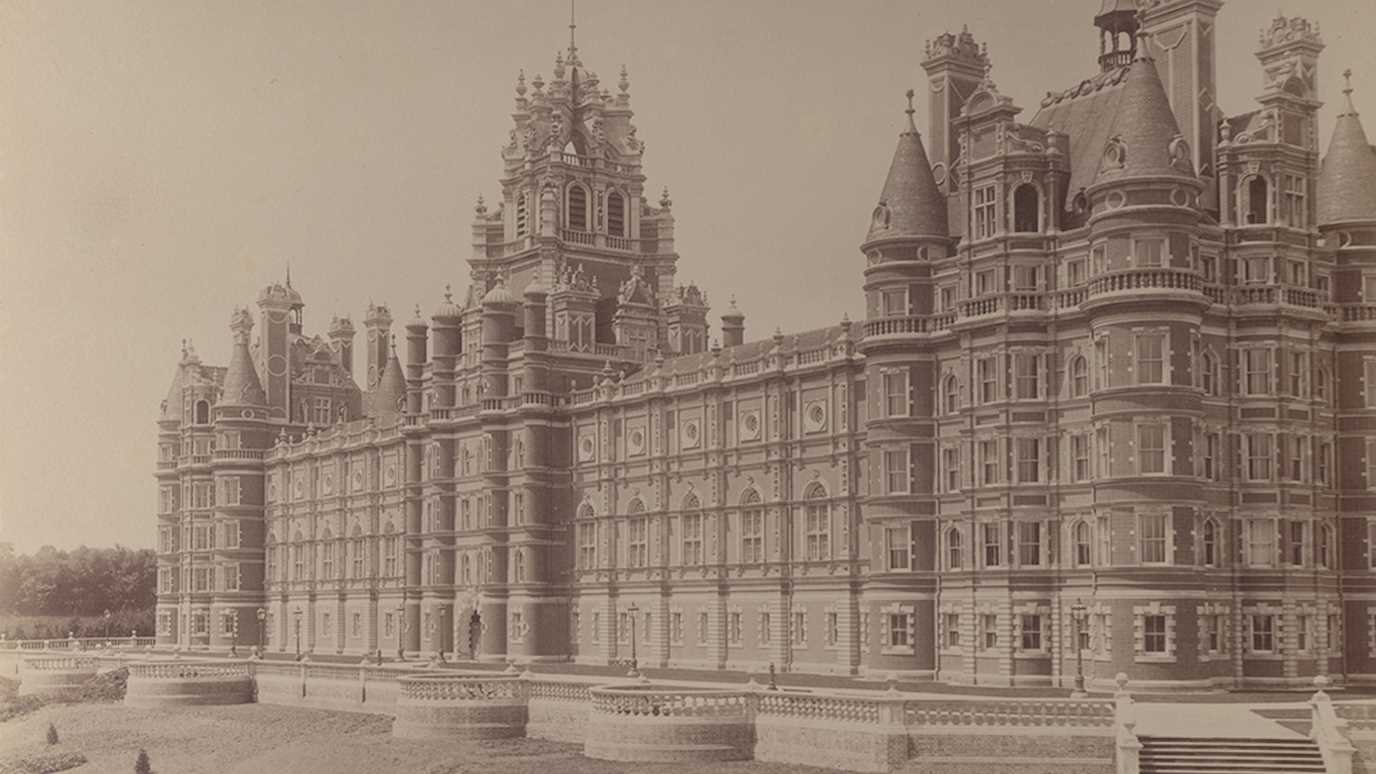
The 2010 European Conference of the Association for Consumer Research will be held at Royal Holloway, University of London, Egham, UK from Wednesday 30th June through to Saturday 3rd July, 2010. A doctoral consortium will be held during the day on 30th June. Conference registration and the opening reception will occur on the evening of 30th June, with presentations from Thursday 1st July through to lunchtime on Saturday, 3rd July.

As in past years, the conference will provide a multi-topical forum for scholarly presentations, discussions, and collaborations on consumer behaviour. Additional specific information on submissions of special sessions, competitive papers, working papers, and roundtables is provided below.

2010 EACR Submissions
Visit the conference website for 2010 EACR » Submit a manuscript or provide a review

International Workshop on “Enhancing the Status of Consumer Research in Non-Western Contexts”
You may also be interested in this event taking place 5th - 6th July 2010 at the University of Strathclyde Business School » Submission details and further information

Programme Structure

There will be six main forums for the presenting and discussing research and scholarly thought.

  1. Special Topic Sessions provide opportunities for focused attention on cutting-edge and important topics. Successful sessions offer a coherent perspective on emerging substantive, theoretical, or methodological issues.
  2. Competitive Paper Sessions include papers that represent the completed work of their authors. The EACR conference co-chairs will assign accepted papers to sessions that reflect similar scholarly interests.
  3. Working Paper Track: Participants typically present preliminary findings from the early stages of a research programme. Authors distribute their papers and display their findings poster-style in a plenary session.
  4. Roundtables: Encourage intensive participant discussion of consumer research topics and issues.
  5. Film Festival: Enables scholars to present their videographies on consumption-related topics at the conference.
  6. Doctoral Consortium: Forum for doctoral students to receive guidance on their dissertations from an expert panel.

Submission and Decision Deadlines

Windsor Building AuditoriumSubmissions for all of the above forums EXCEPT the film festival must be received no later than Monday 11th January, 2010 (N.B. this is a change from the earlier deadline of 21st December).

Submissions for the film festival must be received no later than February 1st, 2010 (please see information about the film festival at the end of the document for more information). Non-video submissions will be accepted on a website devoted to EACR from 16th November, 2009 to 11th January, 2010.

Notification of acceptance in these five categories will be made by 19th April, 2010. Early registration will occur from 1st May - 15th June, 2010.

To allow as many people as possible the opportunity to participate in EACR 2010, please note the requirement that each EACR participant may present in Special Topic and/or Competitive Paper sessions no more than twice during the duration of the conference.

General Submission Requirements and Procedures

All submissions, reviewing, and notification regarding EACR 2010 will be conducted electronically through the web site. The EACR Reviewing Website (to be linked to the Conference website) will contain a link to the 2010 conference site, which will be updated to accept all the required information through an interface that eliminates the need for email submissions. The 2010 EACR Reviewing Website will be available for submissions between 16th November, 2010 and 11th January, 2010.

Format of Submissions

You may submit a Word document with embedded TrueType fonts. (To embed TrueType fonts in Word, click on Tools, then Options, then click on the Save tab, then check the options "Embed TrueType fonts" and "Embed characters in use only.") Alternatively, you may submit documents in a Rich Text Format (save as ".rtf"). All submissions should be scanned for viruses. Make sure to save a copy of your submission information until notification of the final decision. Please ensure that competitive paper submissions do not have author names on the title page.

The EACR Conference web site will require the following information:

"Cover Page" for ALL Submissions. When you first enter the EACR 2007 conference reviewing web site, you will have to register (click on the "Register" button). This will take you to another screen that will ask you for registration information (name, email address, etc.). Thereafter, when you log in to submit your paper/proposal, you will click on the "log in" button and then choose "Submitting Author" as your role. You will have to log in using your email ID and the password that you created when you registered. Once you do this, and you are ready to submit your paper/session, click "submit paper/session." At this stage, you will have to provide the following information:

  • Submission type: Special Topic Session, Competitive Paper, Roundtable, or Working Paper. Once you click on the submission type, the information requested within each category varies somewhat; so make sure you make this selection correctly.
  • Title of paper or session
  • Primary contact person's name, affiliation, mailing address, phone number and email address.
  • Content Area Codes and Methodological Area Codes (see the tables at the bottom of the page)
  • Document in Word or Rich Text Format of your paper/proposal (you will be uploading this file)
  • Names of other co-authors/participants and their affiliations, and whether they are presenting author(s)

Acknowledgement of Receipt
The primary contact person will automatically receive an acknowledgement of receipt of your submission by email. If you do not receive an acknowledgement email within a few days of submission, you should send an email inquiring about the status of your submission to pauline.maclaran@rhul.ac.uk


Specific Requirements and Procedures for Submission under each Category

SPECIAL TOPIC SESSIONS

Special topic sessions are intended to provide opportunities for focused attention to topics of special importance and interest to consumer researchers. They are viewed as appropriate when competitive paper submissions would be unlikely to generate a cohesive session on the topic. It is expected that mainstream topics in consumer research will be well represented in competitive paper submissions. Special topic sessions provide an opportunity to address emerging topics, a special interest topic, or a mainstream topic in a special manner. Sessions are 90 minutes long. Proposals should typically be limited to three papers and a discussion leader or four papers with no discussion leader. In order to promote discussion between the participants and the audience from which a larger understanding of the topic can emerge, special session organizers may select from one of two options as a discussion mechanism.

  1. They may include a discussion leader who is considered to be an expert in the area. If this format is chosen, please make sure that you plan the session so as to leave enough time for the discussion leader to make comments and enhance the quality of the session. Of course, you also want to make sure to leave some time for questions and comments from the audience.
  2. A second option is for the chair of the session to play the role of discussion leader. Please leave adequate time for questions and comments from the audience; the discussion will be energized by the audience and synthesized by the chair of the session.

Other creative mechanisms for encouraging and managing discussion besides the traditional discussion leader method are also welcome but must be described in the session proposal. Note that we are not allowing "double" (3-hour) sessions at this conference.

Content
Besides the "cover page" information that the organizers of special sessions need to provide on the website, special topic session proposals should include:

  1. The titles of the presentations within the session, each with a listing of the authors and their affiliations;
  2. The name of the discussion leader (if any) and his/her affiliation;
  3. A statement that each speaker has agreed to serve if the proposal is accepted, together with his/her name(s);
  4. The session proposal;
  5. A short 75-100 word (single-spaced) abstract of each presentation for publication in the conference programme; and
  6. A longer 750-1,000 word (single-spaced) abstract of each presentation for evaluation by the Programme Committee.

The session proposal should describe the objective of the session, its general orientation, the likely audience, the issues and topics to be covered, and why the session is likely to make an important contribution to consumer research. In addition, it should identify an important substantive, theoretical, or methodological issue in consumer research and then discuss how the session would be structured to move toward a resolution of the issue. The stage of completion of each paper in a special session also must be clarified. Proposals should be as complete as possible so that the Programme Committee can fully evaluate them and make suggestions.

Format and Style
The entire proposal, including abstracts, must not exceed seven single-spaced pages in length. This length restriction assumes the use of a font no smaller than 12 points, and no more than 52 lines per page including headers and footnotes.

Judging/Notification/Acceptance
The Programme Committee will evaluate special topic session proposals based on:

  1. Importance of the topic to consumer research.
  2. Appeal of the session to a broad EACR segment or its intensive appeal to a specific segment, or the ability to expand the field of consumer behaviour to include heretofore unrepresented perspectives and publics,
  3. Likelihood that the session will make an important contribution to consumer research,
  4. Completeness of the proposal and presentation descriptions,
  5. Stage of completion of the research to be presented, and
  6. Opportunity afforded for a discussion of the ideas embodied in the papers.

Authors of accepted sessions will have a short time to revise their submissions based on reviewer comments. Final acceptance is conditional upon submission of the short abstract of each paper (for publication in the conference programme), and the session proposal with the extended abstract of each paper including references (for publication in the proceedings), revised as needed to address reviewers' comments, by 1st June, 2010. Presenters in accepted sessions may, if they wish, submit a paper for inclusion in the Proceedings instead of the extended abstract. Content, format, and punctuality standards for these papers are the same as those for competitive papers (described below).

Please note: This year the revised version of the session proposal due 1st June, 2010 will be the document that appears ultimately in the EACR Proceedings (session overview and long abstracts of each paper, plus references). There will no longer be an opportunity to edit these documents post-conference. We are making this change in an effort to cut the time between the conference and the receipt of the conference proceedings, which has in the past been approximately one year. Session chairs are responsible for quality control over the papers in their sessions, for enforcing deadlines, and for submitting all materials by the deadlines. It is also the chair's responsibility to make sure that the discussant and all other session participants receive copies of each paper or presentation by 15th June, 2010. If you have questions regarding Special Session submissions, please contact Alan Bradshaw: alan.bradshaw@rhul.ac.uk


COMPETITIVE PAPERS

Papers dealing with substantive, methodological, or theoretical topics in consumer research are sought for competitive paper sessions. It is mandatory that all accepted papers be presented by an author at the conference. Authors of competitive papers have the option of not publishing the full paper in the Proceedings. This option requires a minimum contribution of an extended abstract and full references, which increases the value of the record provided in the Conference Proceedings. Therefore, authors will need to indicate whether the submission is made under:

Option 1: Full paper publication in the EACR Proceedings. (If you choose Option 1, the paper must not be published in, accepted for publication by, or submitted to any journal or other conference proceedings, and should present the results of completed research.)

Option 2: Publication of an extended abstract accompanied by full citations.

Format and Style for Competitive Papers
The primary authors will provide the "cover page" information on the web site. Your competitive paper submission should consist of the following:

  1. The first page should state the title of the paper only (not the authors)
  2. This should be followed by a 75-100 word abstract.
  3. This should then be followed on the next pages by a 750-1,000 word, single-spaced, extended abstract which should provide a summary of the paper, including conceptualization, method, and major findings. In order to ease the publication task, no tables or figures should be included in the extended abstract.
  4. After the extended abstract, the next page should restate the title (and authors should NOT be identified) and begin the body of the paper. The body of the paper must not exceed 20 double-spaced pages in total length, including all tables, figures, notes, and references. This length restriction assumes the use of a font no smaller than 12 points, no more than 75 characters per line, and no more than 26 lines per page including headers and footnotes. Papers must follow the current style of the Journal of Consumer Research except that tables, figures, and footnotes are to be included within the text, not appended to the end of the paper.

Because reviewing will be blind, authors should refrain from identifying themselves or their affiliations in the body of the paper and in footnotes. Please note that it is the submitting author's responsibility to make sure that the document does not contain any identifying information when saved as a Word or a Rich Text Format file. (For example, right click on the file in Windows Explorer, go to "Properties," and then "Summary," to ensure that all identifying information is removed.)

Judging/Notification/Publication
Judging of papers will be blind. Reviewers will evaluate each paper on the basis of:

  1. Quality of the research;
  2. Contribution to the field of consumer behaviour; and
  3. Interest of the topic to current and potential EACR members.

Authors of accepted papers will have a short time to revise their papers based on reviewer comments. Final acceptance is conditional upon submission of the short abstract (for publication in the conference programme) and the paper or extended abstract with references (for publication in the proceedings), revised as needed to address reviewers' comments, by 1st June 2010. It is also the author's responsibility to make sure that the session chair and all other session participants receive copies of the paper and presentation by 15th June, 2010.

Please note: This year the revised version of the competitive paper due 1st June, 2010 will be the document that appears ultimately in the EACR Proceedings. There will no longer be an opportunity to edit these documents post-conference. We are making this change in an effort to cut the time between the conference and the receipt of the conference proceedings, which has in the past been approximately one year.

Competitive papers accepted under Option 1 (publication of the full paper) will be published in the copyrighted proceedings, European Advances in Consumer Research. Note that this is conditional on the paper being presented at the conference. Each author of an accepted paper will be required to sign a form releasing the copyright of the paper to the Association for Consumer Research. If you have questions regarding Competitive Paper submissions, please contact Pauline Maclaran: pauline.maclaran@rhul.ac.uk


WORKING PAPERS

Papers reporting the results of research in its early stages, and papers that the authors do not wish to present in competitive sessions, should be submitted to the Working Paper track. Papers dealing with substantive, theoretical, or methodological topics in consumer research are sought for the working paper track.

For papers accepted for the working paper track, each author will be asked to:

  1. Prepare a "poster" for display during the session (detailed guidelines will be sent with acceptances);
  2. Bring several copies of the working paper to give to interested EACR participants; and,
  3. Make themselves available for discussion during a designated time on the programme.

The extended working paper abstracts with full references will be published in the Proceedings.

Format and Style for Working Papers
When submitting a working paper, the web site will prompt you for the "cover page" information. Here, you will upload your "working paper" information. We do not require the submission of a completed paper in this category; we only need a short and an extended abstract. The first page should contain a 75-100 word abstract. This should be followed on the next pages by a 750-1,000 word, single-spaced, extended abstract which should provide a summary of the paper, including conceptualization, method, and major findings. In order to ease the publication task, no tables or figures should be included in the extended abstract.

Judging/Notification/Publication
Judging of papers will be blind. Reviewers will evaluate each paper on the basis of:

  1. Quality of the research;
  2. Contribution to the field of consumer behaviour; and
  3. Interest of the topic to current and potential EACR members.

Authors of accepted papers will have a short time to revise their papers based on reviewer comments. Final acceptance is conditional upon submission of the short abstract (for publication in the conference programme) and the extended abstract with references (for publication in the proceedings), revised as needed to address reviewers' comments, by 1st June, 2010.

Please note: This year the revised version of the working paper due 1st June, 2010 will be the document that appears ultimately in the EACR Proceedings. There will no longer be an opportunity to edit these documents post-conference. We are making this change in an effort to cut the time between the conference and the receipt of the conference proceedings, which has in the past been approximately one year.

If you have questions regarding Working Paper submissions, please contact Andreas Chatzidakis coordinator of Working papers for EACR 2010, at andreas.chatzidakis@rhul.ac.uk


ROUNDTABLES

Roundtable discussions provide a great opportunity to develop collaborative work, explore new research topics, receive feedback on existing, ongoing research projects, or discuss other issues of interest to consumer researchers. For example, roundtable organizers might create a forum in which EACR members can learn from "experts" in a given area about issues relevant to their research interests (e.g., implicit memory, qualitative data analysis). Alternatively, they may involve more informal discussions among researchers with common interests in substantive topics or research methodologies (e.g., innovation and consumer psychology, consumer self-control). Roundtable sessions allow EACR members to participate in an informal, collaborative setting, which leads to interactive discussion often missing from the more formal presentations given at the EACR conference.

Content
Besides the "cover page" information that the web site will request, roundtable proposals that you upload must include:

  1. The name of the primary organizer,
  2. A list of at least seven EACR members who are committed to attending the session,
  3. A short 75-100 word (single-spaced) abstract of the proposed roundtable discussion for publication in the conference programme, and
  4. An extended abstract explaining the session's purpose and content to be included in the proceedings, of approximately 750 - 1,000 words.

Session discussion leaders are responsible for quality control over the discussion in their sessions, for enforcing deadlines, and for submitting all materials to Chris Hackley. If you have questions regarding Roundtable submissions, please contact Chris Hackley at chris.hackley@rhul.ac.uk


FILM FESTIVAL SUBMISSIONS

Submission and Decision Deadlines
Submission: February 1st, 2010
Notification of accepted films: April 15th, 2010

General Submission Requirements and Procedures
"Cover Page" – please provide the following information:

  • Title of video
  • Primary contact person's name, affiliation, mailing address, phone number and email address.
  • Content Area Codes
  • Secondary contact person's information: Name of one other author/participant including his/her affiliation, mailing address, phone number and email address who will serve as a secondary contact in case we are unable to contact the primary contact person
  • Names of other co-filmmakers and their affiliations

Appropriate submissions are edited video recordings on topics related to consumer behaviour. Eligible material should be edited to professional standards using any of the desktop editing systems now available. Submissions are invited in three categories:

  • Shorts (approximately 10 minutes in length),
  • Capsules (approximately 20 minutes in length), and
  • Features (approximately 60 minutes in length).

Entries will be evaluated based upon their insight into some aspect of consumer behaviour, topic, creativity, and technical competence. For this EACR festival, films that have been shown at other film festivals, including past ACR festivals, are acceptable.

Filmmakers whose films are accepted should be present at the initial showing of their film and available to answer subsequent questions. Submission format is non-region-encoded DVD only. This is a juried competition and abstracts of accepted films will appear in the EACR programme, proceedings, and on the EACR web site programme. Viewers will vote on "People's Choice" Awards to be announced at the Saturday luncheon. A Juror's Award is planned as well. Please direct questions about the Film Festival to either co-chair: Russ Belk, tel. +1 416-736-2100 ext. 20852, rbelk@schulich.yorku.ca or Rob Kozinets tel. +1 416-736-2100 ext. 20513, rkozinets@schulich.yorku.ca

To submit a video, please note the following policies:

  1. Two preview copies of the work on non-region-encoded DVD should be included. These copies will not be returned. Do not submit master copies, as damage or loss in the mails is remotely possible. Please label the spine and face of the videotape with title, length, and contact person's name.
  2. Copies submitted should be as close to finished as possible, although some minor editing will be allowed on accepted entries.
  3. Important: Filmmakers are responsible for getting permission from copyright and trademark holders for any images, music, or video material that is under copyright (note: even clips of music and of commercial video are copyrighted material).

Complete the same paperwork required for a competitive paper plus a jpeg photo (see d below), including:

  1. Cover sheet with contact information (feel free to use the "other" category in describing content areas and methods areas). On this sheet, please add the length of your work, date of completion, original shooting format (e.g., mini-DV) and full credits for the video.
  2. Short (75-100 word) summary (for programme)
  3. Long (500-1000 word) summary (for jury and proceedings)
  4. One jpeg format still or poster for your film, to appear on the EACR Conference web site if your film is accepted. The photo should be 72-100 dpi.
  5. Stamped, self-addressed notification postcard
  6. A statement that one or more of the film-makers will be present at the initial showing of their work if it is accepted

Written material should be emailed to both rbelk@schulich.yorku.ca and rkozinets@schulich.yorku.ca

One of the two copies of your video tape should be sent to EACH of the two Film Festival Co-chairs: Russell Belk and Robert V. Kozinets, Schulich School of Business-York University, 4700 Keele St., Toronto, ON M5P 1P3, CANADA.

Final copies of accepted work in non-region-encoded DVD must be received by Robert Kozinets at the address above by June 15th, 2010. If your work is accepted, you may prepare and post one poster promoting your film. The posters can be up to 24 inches wide and 32 inches tall and should be mounted on poster board. Your poster can be smaller than this, but should still be mounted on a 24x32 poster board. These posters will be displayed at the opening EACR cocktail party and subsequently at the film screening room.


DOCTRAL COLLOQIUM

PhD students should submit a 2-page extended abstract in a Word .doc to Dr Avi Shankar (A.Shankar@bath.ac.uk) by February 1st, 2010. Clearly identify your email with EACR Doc Colloquium in the subject heading of your email. The abstract should cover the following issues:

  • What is the theoretical/ conceptual or practical focus of your PhD research?
  • Why is this important and for whom?
  • What is/ are your research question/s?
  • How are you going to answer them? What contribution are you making?
  • Why is this important?

The exact details of the colloquium have yet to be finalized however accepted students should be prepared to give either a short presentation or a poster of their work. You will be notified of acceptance of your paper by Avi Shankar.


EACR Conference Content Codes

Select three to six content areas that describe your submission, and type the corresponding numbers in the space provided on the cover sheet when you submit your work for reviewing.

Acculturation 01
Advertising Effects 02
Aesthetic/Hedonistic Consumption 03
Affect and Emotion 04
Aged Consumers 05
Attitudes and Intentions 06
Attribution/Self-Perception 07
Bargaining/Negotiation Models 08
Behavioural Decision Theory 09
Behavioural Learning Theory 10
Brand Equity 11
Brand Loyalty 12
Buyer Interaction 13
Categorization 14
Causal Modeling Issues 15
Charity and Gift Giving 16
Child/Adolescent Consumers 17
Choice Models 18
Clothing and Fashion 19
Cognition 20
Cognitive Structure 21
Communication and Persuasion 22
Consumer Education/Information 23
Consumer Satisfaction/ Dissatisfaction/Complaining 24
Consumer Socialization 25
Critical Theory 26
Cross-Cultural Research 27
Deceptive Advertising 28
Decision Support Systems 29
Diffusion and Innovation 30
Drug and Alcohol Consumption 31
Economic Analysis 32
Economic Psychology 33
Effects of Marketing Variables 34
Experiential Effects 35
Family Decision-Making 36
Food and Nutrition 37
Gender Issues 38
Grief/Death 39
Group Decision Making 40
Health and Safety Issues 41
Imagery/ Imagination 42
Impression Formation 43
Industrial/Organizational Buying 44
Inference Making 45
Information Processing 46
Information Search/Overload 47
Internet & Technology 48
Involvement 49
Learning 50
Leisure and Recreation 51
Life Course/Life Span 52
Lifestyle and Psychographics 53
Literary Theory 54
Macro-Level Consumer Behaviour 55
Memory 56
Minority Issues 57
Motivation 58
Multi-Attribute Models 59
Opinion Leadership 60
Packaging 61
Patronage Behaviour 62
Perceived Risk 63
Perceptual Processes 64
Personality 65
Philosophy of Science 66
Post-Positivist Inquiry 67
Price Perception 68
Product Knowledge and Expertise 69
Product Perception and Preference 70
Promotions 71
Public/Not for Profit Issues 72
Public Policy/Social Issues 73
Quality of Life 74
Reference Groups 75
Retail Display Effects 76
Retailing and Store Image 77
Ritualistic Consumption 78
Social Class 79
Social Influence 80
Sociological Analysis 81
Source Effects 82
Symbolic Consumption/Semiotics 83
Textual Interpretation 84
Theory Construction 85
Time Consumption 86
Transformative Consumer Research 87
Values and Beliefs 88
Variety Seeking/Product Trial 89
Other: 90


EACR Conference Method Codes

Select up to four methodological areas that best describe your submission, and type the corresponding numbers in the space provided on the cover sheet when you submit your work for reviewing.

Bayesian Inference M1
Canonical Correlation Analysis M2
Case Study M3
Cluster Analysis/Three-Way Scaling M4
Collage/ZMET Technique M5
Conjoint Analysis M6
Content Analysis M7
Demographic Analysis M8
Depth Interviewing M9
Discriminate Analysis M10
Economic Modeling/Econometrics M11
Ethnography M12
Event History Analysis M13
Experimental Design and Analysis M14
Exploratory Data Analysis M15
Factor Analysis M16
Focus Groups/Group Interviewing M17
Historical Methods M18
Literary Criticism M19
Legit and Probity Models M20
Measures of Association M21
Meta-Analysis M22
Mixed Methods/Multimethod Research M23
Multiple Indicators M24
Multivariate Data Analysis M25
Network Analysis M26
Nominal Data Analysis M27
Observation Methods M28
Psychometric Issues M29
Purchase Simulation M30
Qualitative Research Methods M31
Reliability and Validity Issues M32
Scaling M33
Secondary Data Analysis M34
Statistical Simulation M35
Structural Equations/Path Analysis M36
Survey Research Issues M37
Time Series Analysis M38
Videography M39
Other (Please specify): M40

Last updated Mon, 14-Dec-2009 15:47 GMT / Management-webmaster
School of Management, Royal Holloway, University of London, Egham, Surrey TW20 0EX
Tel/Fax : +44 (0)1784 276213/276100