




Home > Classics home > Ancient History (BA)

Ancient History (BA)

Back to course search results

Course details

Ancient History offers the opportunity to study the history of Greece and Rome in the Classical period (600 BCE to 700 CE). Ancient History is a fundamental area of study: its politics, events, and development lying behind our understanding of many aspects of historical societies and, indeed, our own culture. You will explore themes in Greek and Roman history, such as the emergence (and fall) of democracy and the rise, decline and fall of Empires. The course is designed to build skills and knowledge from day one and to develop your understanding of key periods and problems in Greek and Roman history. In year two, the experience of historical periods will be deepened and widened and you will develop skills in research and concentrate on your individual interests, which will culminate in specialist studies and individual research projects in year 3.

Students will have the opportunity to study in other areas of the curriculum as well, notably archeology, literature, philosophy and language.

Key facts

Key facts about the course
UCAS code V110
Qualification Bachelor of Arts (Honours)
Duration Three years full time
Typical A-level offer ABB or equivalent
Department Classics

Fees / funding

Please visit the Fees and funding| pages for the latest information about tuition fees| and the different sources of funding which may be available to you.

How to apply

Applications for entry to all our full-time undergraduate degrees must be made through the Universities and Colleges Admissions Service (UCAS|). Further information on making your application through UCAS is available on the Applying| section of our website.

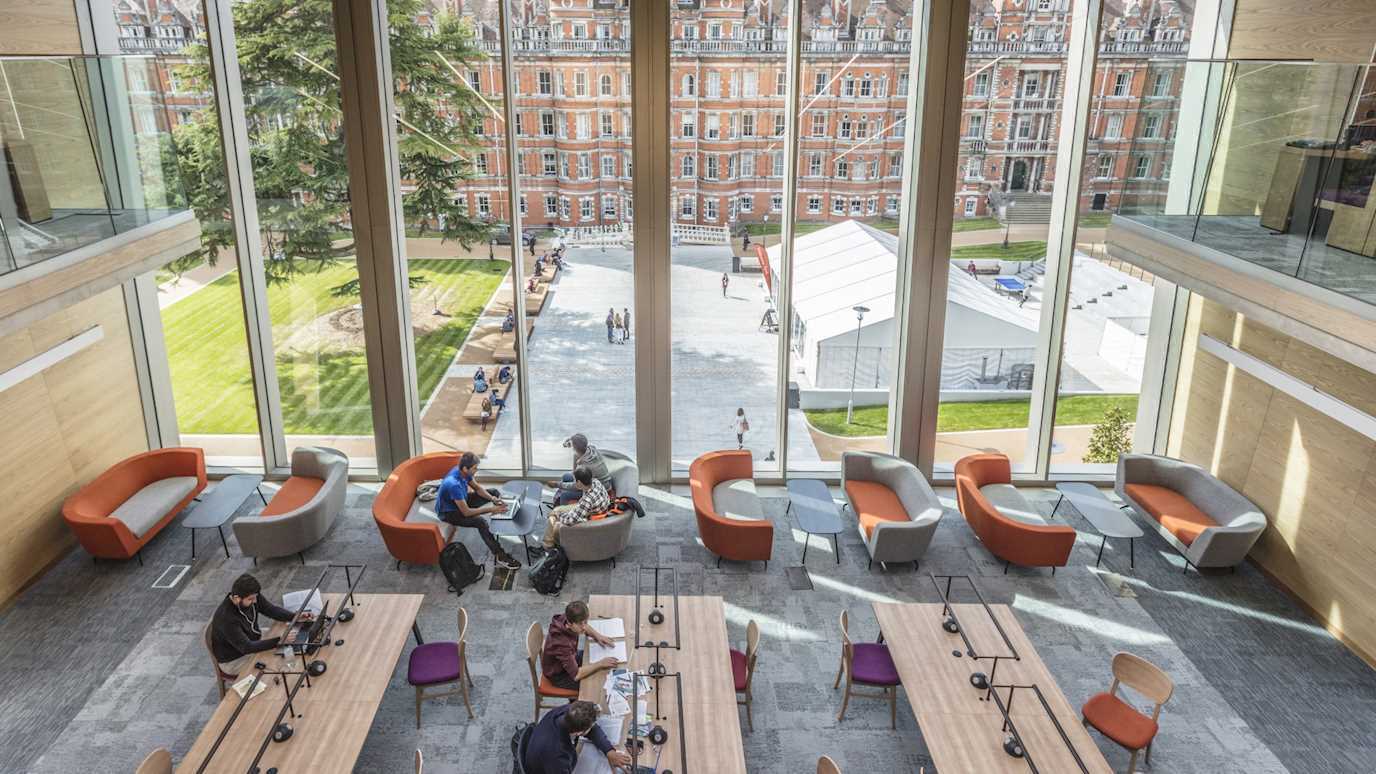
If you are interested in applying to Royal Holloway, why not arrange a visit to our campus to see for yourself what academic and student life is like here. The College runs three annual Open days| which give you the chance to meet our students and teaching staff, and get a taste of what university life is really like.

Prospective students who receive an offer of a place are invited to attend a UCAS day, where they are shown around the department, given the opportunity to speak with academic members of staff and meet current students.

Entry requirements

Typical offers

Typical offers
A-levels ABB or equivalent
International Baccalaureate 34 points
BTEC National Diploma Distinction, Distinction, Merit
English language requirements

IELTS 6.5 overall with 7.0 in writing, TOEFL (iBT) 88 overall with 26 in writing, for non-native English speaking applicants

Applicants come from a diverse range of backgrounds and we accept a broad range of qualifications. Examples of other qualifications we recognise include QAA-approved Access to HE courses, in which we expect students to receive a minimum Pass grade, and the Greek Apolyterion, for which our standard offer is 18/20.

Students from overseas should visit the International| pages for further information on the entry requirements from their country and English language requirements.  Royal Holloway International offers an International Foundation Programme and English language pre-sessional courses, allowing students the opportunity to develop their study skills and English language before starting their undergraduate degree.

We make decisions based on achieved or predicted grades, personal statements and references. More information on how your application will be assessed, and tips for your personal statement can be found on our Applying| pages.

Most applicants will also be invited for interview on a UCAS day before an offer is made. UCAS days offer you the opportunity to visit the College and the Department, to sit in on a first year lecture and to attend a presentation by the Admissions Tutor, as well as a friendly and informal individual interview with a member of academic staff. Some applicants will receive offers without interview, particularly those with high achieved/predicted grades and those who live a long way from Egham, including overseas applicants. Those with offers are still welcome to attend a UCAS day if they can, but rather than being interviewed, they can participate in a group question-and-answer session with academic staff and students.

Why choose this course?

  • Teaching from a range of internationally recognised experts in the field
  • To understand a formative and fascinating period of world history
  • To develop a detailed understanding of the knowledge of a variety of critical    approaches to Ancient History methodological questions and issues involved   in studying Ancient history
  • To develop transferable skills useful in any walk of life, such as critical analysis, presentational skills, and an awareness of different approaches to crucial issues
  • A friendly experience of study in a supportive and enthused environment. 

What you'll learn

You will learn about the history and society of antiquity, from the beginnings of Classical civilization in the seventh century BCE to the fall of the Roman empire in the seventh century CE. You will study politics, social developments, military history, cultural history, economics, and the history of personal relations, including gender and family. You’ll get a grounding in methodologies: how to read primary and secondary sources, how to balance evidence and ways of thinking about historical and social issues: key skills. Our courses bring you close to the primary material, the writings and artifacts from antiquity, and allows you to develop your knowledge and skills.

Throughout the course, you will:

  •  learn to analyse different ancient institutions and societies
  •  improve your knowledge of the histories of Greece and Rome 
  • develop skills for study the structure and evolution of institutions and societies
  • acquire interpretative methodologies in dealing with a variety of material.
  • All undergraduate degree courses at Royal Holloway provide a flexible approach to study.

See the Department’s website| for further information.

View the full course specification for Ancient History (BA) in the Programme Specification Repository|.

How you'll learn & be assessed

The course has a modular structure, whereby students take 12 course units at the rate of 4 whole units per year. At least 7.5 units of Ancient History must be taken over the three years of the degree, three units at year 2 level, and three at year 3 level.

You will be taught through a mixture of lectures, seminars and tutorials, depending on the subjects studied. Much of your work will be outside class: reading in the library or via e-learning resources (we have a comprehensive e-learning facility, Moodle). You will also be preparing for seminars and lectures, working on essays, and undertaking group projects and wide-ranging but guided independent study.

Assessment takes place by a flexible combination of essays, projects, examinations, and tests, various methods being employed depending on the nature of the course unit and the intended learning outcomes. In the third-year, students completed a guided and extended piece of independent research, a 10,000 word dissertation, on a historical subject.

Employability & career opportunities

Choosing a Classical subject at Royal Holloway will equip you with a broad range of skills, such as the ability to analyse and summarise content, critically evaluate resources and construct coherent arguments in the written and spoken word. Studying an intellectually demanding discipline will demonstrate to employers that you enjoy being challenged and are able to understand complex issues. You will also develop the transferable skills valued by employers:  communication and presentation skills, teamwork, time management and critical thinking. From 2013 (subject to validation) we will be adding a new ‘skills’ module as part of the degree programme, as well as a competitive new work placement scheme – the only such scheme in a UK Classics department.

Our recent graduates have very successfully entered a wide range of careers including law, government, publishing, finance, teaching, marketing and the media. Many have also progressed to postgraduate study in a variety of fields. To find out more about what our students are doing now, please visit the department’s website|.


Comment on this page

Did you find the information you were looking for? Is there a broken link or content that needs updating? Let us know so we can improve the page.

Note: If you need further information or have a question that cannot be satisfied by this page, please call our switchboard on +44 (0)1784 434455.

This window will close when you submit your comment.

Add Your Feedback
Close|