




Home > History home > History and Spanish (BA)

History and Spanish (BA)

Back to course search results

Course details

This course offers the opportunity to combine Spanish language and literature with the study of history. You will divide your time equally between the two subjects and spend the third year abroad in a Spanish-speaking country. 

The course will develop your Spanish language skills to a very high level while immersing you in the fascinating literature and cultures of the Hispanic world. Our approach is eclectic, with course units covering a wide array of topics, including language and translation, literature, film, history, visual arts, and popular culture.

As members of one of the largest and most influential history departments in the country, you can choose from an exceptional range of historical subjects, spreading your studies across the medieval and modern worlds with the chance to specialise in either period. You'll be able to study topics as diverse as English family life in the seventeenth century, international terrorism in the twentieth century, and the empires of the Silk Road.

Key facts

Key facts about the course
UCAS code VR14
Qualification Bachelor of Arts (Honours)
Duration Four years full time
Typical A-level offer AAB including A2 Spanish or another modern language or Latin, or equivalent
Department History, Modern Languages, Literatures and Cultures

Fees / funding

Please visit the Fees and funding| pages for the latest information about tuition fees| and the different sources of funding which may be available to you.

How to apply

Applications for entry to all our full-time undergraduate degrees must be made through the Universities and Colleges Admissions Service (UCAS|). Further information on making your application through UCAS is available on the Applying| section of our website.

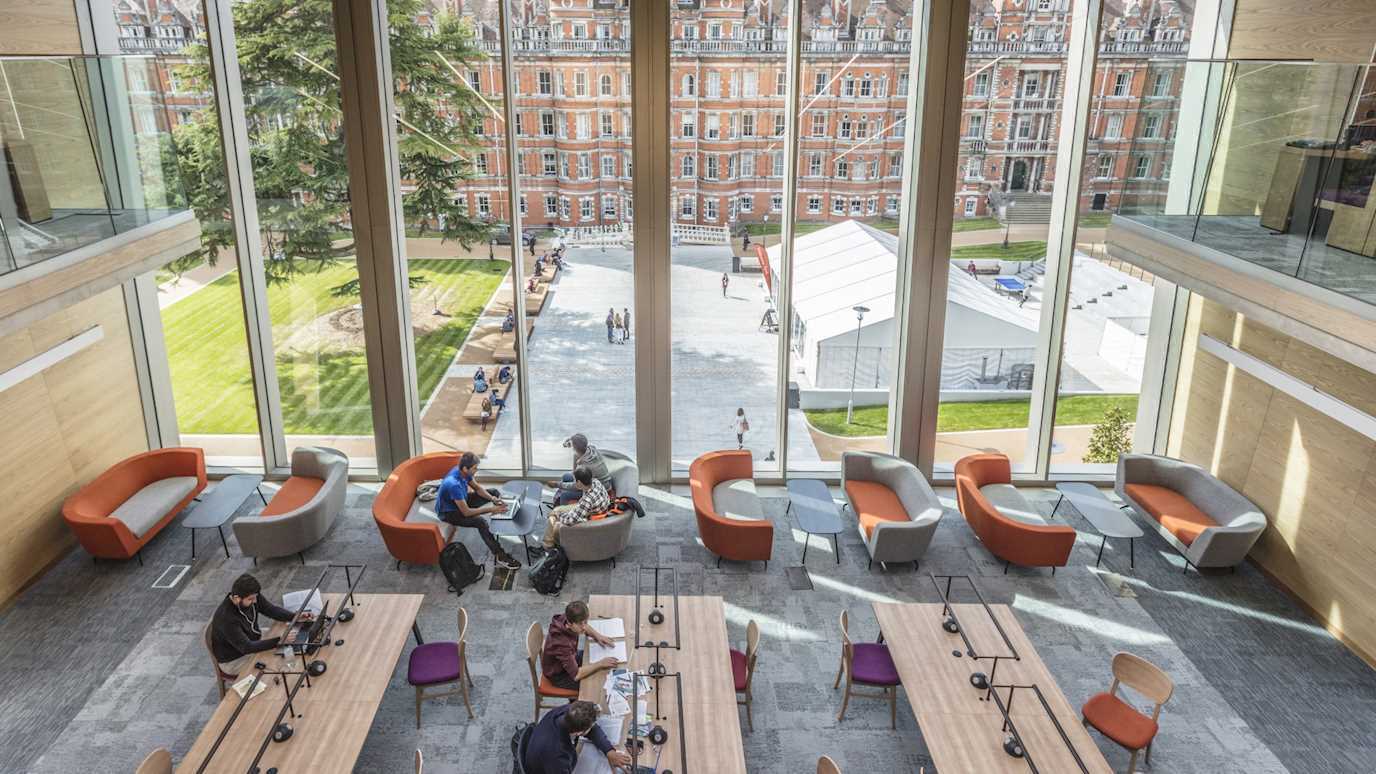
If you are interested in applying to Royal Holloway, why not arrange a visit to our campus to see for yourself what academic and student life is like here. The College runs three annual Open days| which give you the chance to meet our students and teaching staff, and get a taste of what university life is really like.

Prospective students who receive an offer of a place are invited to attend a UCAS day, where they are shown around the department, given the opportunity to speak with academic members of staff and meet current students.

Entry requirements

Typical offers

Typical offers
A-levels AAB including A2 Spanish or another modern language or Latin, or equivalent
International Baccalaureate 35 points including 6 in Spanish or another European language or Latin, at higher level
BTEC National Diploma Distinction, Distinction, Distinction
English language requirements IELTS and TOEFL scores| for non-native English speaking applicants

While Spanish normally requires a minimum B grade at A2 level, we also accept students with little or no previous knowledge of Spanish, who will start with an intensive beginner’s language unit in the first year. We nevertheless look in such cases for evidence of proven linguistic ability, normally represented by a B grade at A2 or an A grade at AS level in another modern language or Latin.

Applicants come from a diverse range of backgrounds and we accept a broad range of qualifications in addition to A-levels. Special consideration will be given to mature applicants, and we are happy to consider applicants with QAA-approved Access to HE qualifications.

Students from overseas should visit the International| pages for further information on the entry requirements from their country and English language requirements.  Royal Holloway International offers an International Foundation Programme and English language pre-sessional courses, allowing students the opportunity to develop their study skills and English language before starting their undergraduate degree.

We make decisions based on achieved or predicted grades, personal statements and references. More information on how your application will be assessed, and tips for your personal statement can be found on our Applying| pages.

We occasionally invite candidates to interview, usually in cases where we would like more information on which to base a decision. Applicants who are unable to attend, such as overseas students, will be interviewed by telephone.

Why choose this course?

  • The School of Modern Languages offers excellent quality equipment and dedicated language learning facilities.
  • Our approach to the study of the culture of the Hispanic world combines interactive seminar with elements of the more traditional university lecture.
  • You will have the opportunity to explore a coherent and compelling historical framework that brings history alive under the guidance of internationally-renowned specialists.
  • Combine the pursuit of historical knowledge with the acquisition of key transferable career skills.
  • You will spend a year abroad and can choose to study at university, be a teaching assistant or go on a work placement. We have an increasing number of links with universities across Spain and Latin America.

What you'll learn

Each year you will take two course units in each subject.  

The Spanish element covers an array of topics relating to the Hispanic world, including language and translation, literature, film, history, visual arts, and popular culture. You will use film resources and computer programmes designed by the School of Modern Languages, Literatures and Cultures; with language laboratories, satellite television and internet available all day for personal study.

The History course units blend analysis, narrative and argument. After taking introductory courses in the first year, you will choose from a wide range of elective units covering subjects such as Tudor Britain and the Victorians and countries such as the USA, Spain and China.

Throughout the course, you will:

  • learn to converse and write confidently and fluently in Spanish
  • analyse and respond critically to Spanish materials in a wide variety of media
  • understand and critique primary and secondary historical sources
  • develop insights, narratives and themes that account for historical events.

The websites of the School of Modern Languages, Literatures and Cultures| and the Department of History| give detailed lists of the course units taken for each different subject.

View the full course specification for History and Spanish (BA) in the Programme Specification Repository|.

How you'll learn & be assessed

Our teaching combines a majority of seminars and small group work as well as role play and conversational activities, with some lectures. Private study and preparation are essential parts of every course, and you will have access to many online resources such as Powerpoint slideshows, copies of selected primary and secondary texts, audiovisual materials, class and seminar preparation aids, links to relevant external sites, quizzes and grammar and essay writing guidance, and the University’s comprehensive e-learning facility, Moodle. When you start with us, you are assigned a Personal Tutor to support you academically and personally and who holds regular surgery hours at least twice weekly.

Each course is assessed using a varied range of methods such as coursework and end of year examinations. Coursework includes essays, language exercises, translations and reports. Oral presentations and computer-based tests are used in some course units to assess grammar and comprehension skills. You can, to some extent, choose course units which suit your own assessment preferences.

Assessment is by a mixture of coursework and end-of-year examination in varying proportions, depending on the course units you choose to take. In the final year you will complete a 10,000 word dissertation for History. The first year is foundational and marks do not count towards your final degree. The second year, year abroad and final year marks do count, with more importance being given to the final year marks in order to reward progress and achievement.

You will take a study skills course during your first year, designed to equip you with and enhance the writing skills you will need to be successful in your degree. This course does not count towards your final degree award but you are required to pass it to progress to your second year.

Employability & career opportunities

Choosing a language degree at Royal Holloway will equip you with not only a broad range of transferable skills – self-reliance, independent thinking, time-management – but the ability to communicate fluently in a foreign language is a rare skill that is highly valued by employers. As well as gaining practical skills in translation and interpretation, you will increase your cultural awareness, initiative and independence by spending time abroad.

Our recent graduates have very successfully entered a wide range of careers including many language-related fields including international management, consultancy, sales and marketing, media and publishing, banking, the arts, politics, the Civil Service, teaching, travel and tourism, translating and interpreting. Our graduates have also gone on to be language assistants and teacher trainers, as well as many going on to advanced study in a variety of fields. For more information on what our graduates are doing now, please see the Modern Lanuages website| and the History Department website|.


Comment on this page

Did you find the information you were looking for? Is there a broken link or content that needs updating? Let us know so we can improve the page.

Note: If you need further information or have a question that cannot be satisfied by this page, please call our switchboard on +44 (0)1784 434455.

This window will close when you submit your comment.

Add Your Feedback
Close|