
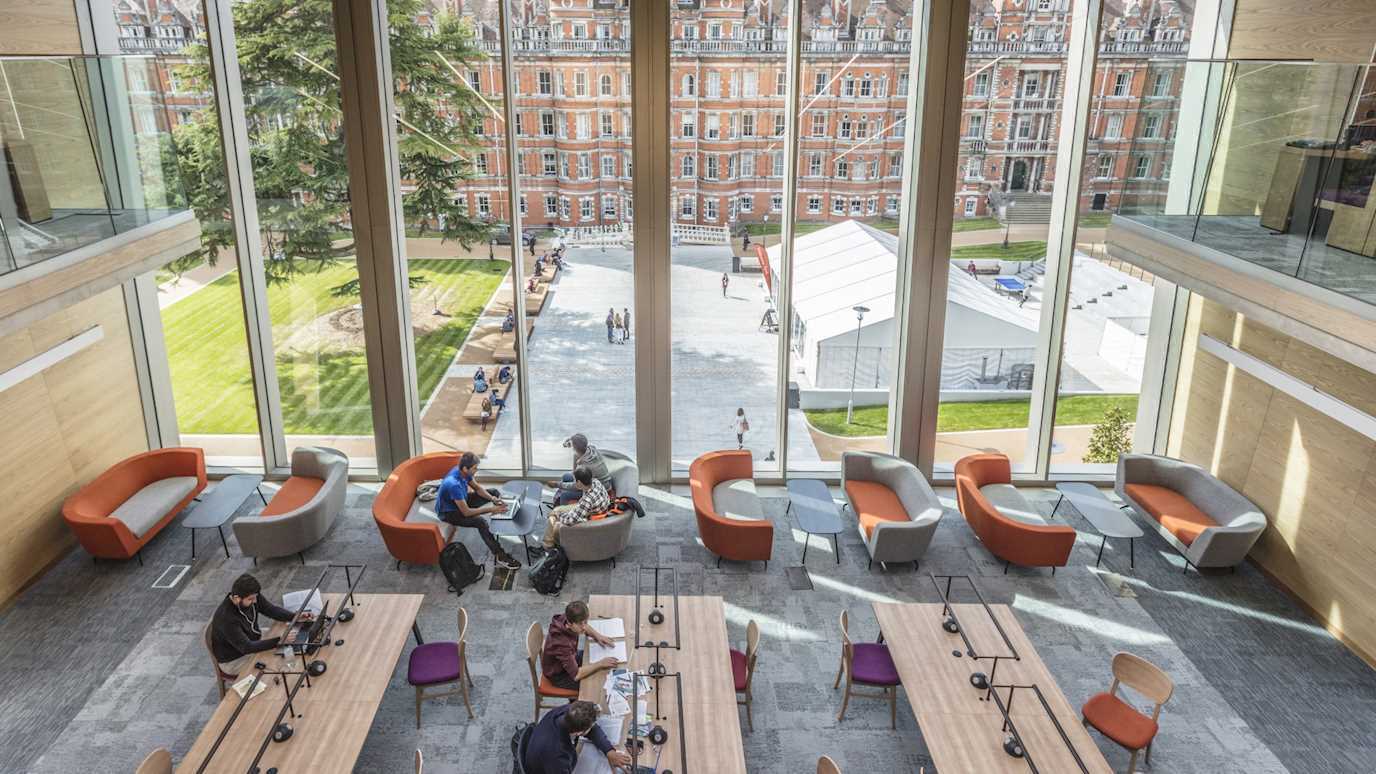






On this page you will find information on our teaching across different disciplines of Music, and links to explore specific details of our undergraduate and postgraduate degree programmes.
Whether in composition, performance, or academic musical study, students in the Music Department benefit from research-led teaching where the expertise of our academic staff offers cutting-edge approaches and encompasses a diversity of genres, historical periods, global contexts and much more.
Musicology

We have a long-standing international reputation for the study of music in its historical contexts. As part of the core study of music history in the first and second year of the undergraduate course, all students are introduced to music from the Medieval through to the Modern periods, and many take up the opportunity to continue their studies through optional courses that approach music through its social and political contexts, its compositional styles and notations, its aesthetic and philosophical ideas, and through editing early sources. We have a range of expertise in Early Music (Geoffrey Baker, Stephen Rose and Henry Stobart) and also in more modern repertoires from the eighteenth century through to contemporary music (Mark Berry, Julie Brown, Paul Harper-Scott, Julian Johnson, Tim Summers).
These interests are reflected in the wide range of option courses on offer to second and third year students, which in any year may include courses such as Editing and Notation of Early Music, Music and Politics in Tudor England, Music and Society in Purcell’s London, J S Bach: Context and Reception, Mozart’s Operas, Late Beethoven, Wagner’s Ring, Bruckner’s Symphonies, Mahler and Viennese Modernism, Music in 1920s Paris, German Music Between the Wars (1919-1939), Shostakovich String Quartets, The Music Film.
At Royal Holloway, students are given a thorough training in music theory and analysis, starting with the theory of tonal music, including approaches to small- and large-scale form, harmony and counterpoint. For those wanting to take their studies further, these can be extended to specialised techniques such as Schenkerian analysis. There is also a focus on pre-tonal and post-tonal music, with students encountering suitable methods for analysis. The emphasis of theory training at Royal Holloway is not to analyse music simply for its own sake, but rather to equip students with the ability to grasp the workings of Western art music in order to better understand its function and meaning in the society in which it was written.
Performance
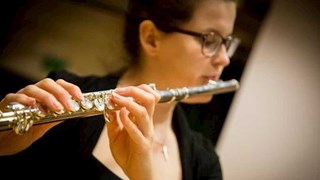
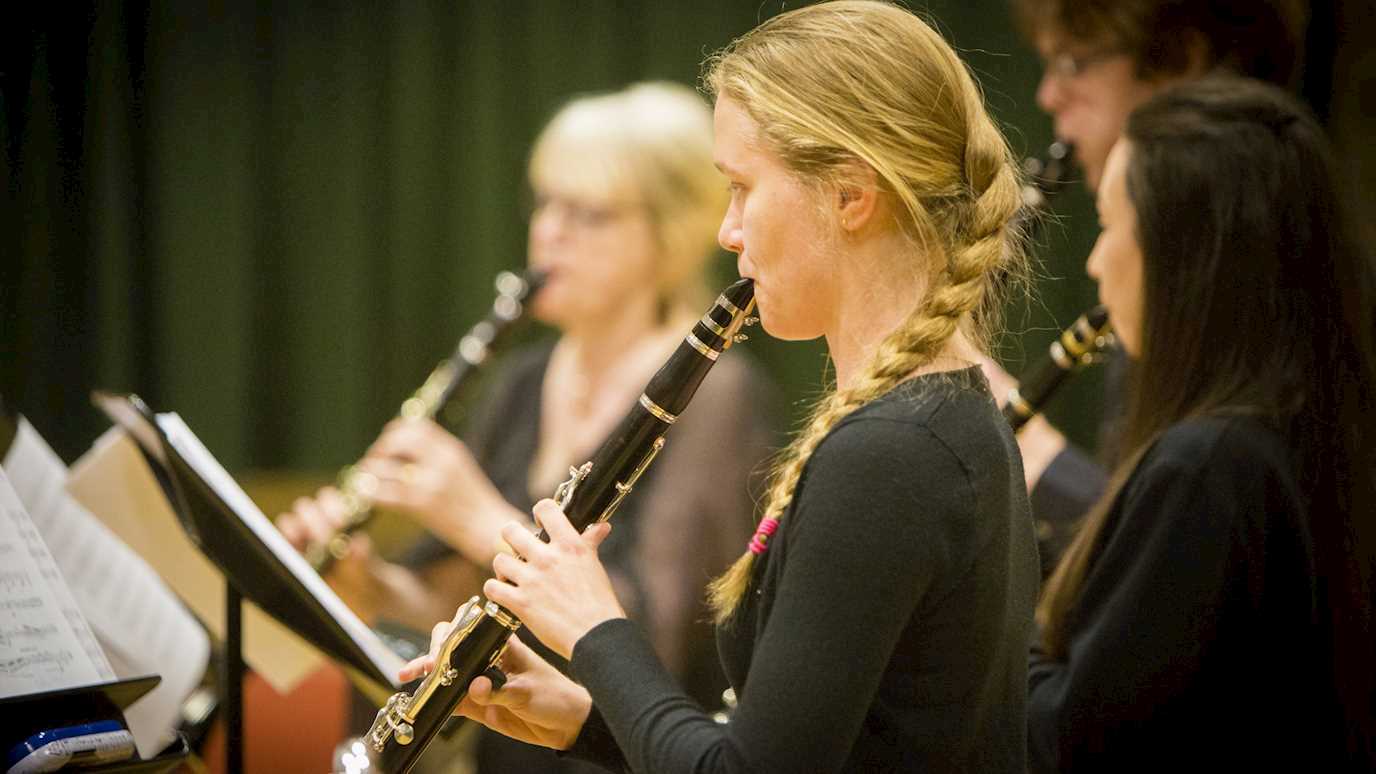
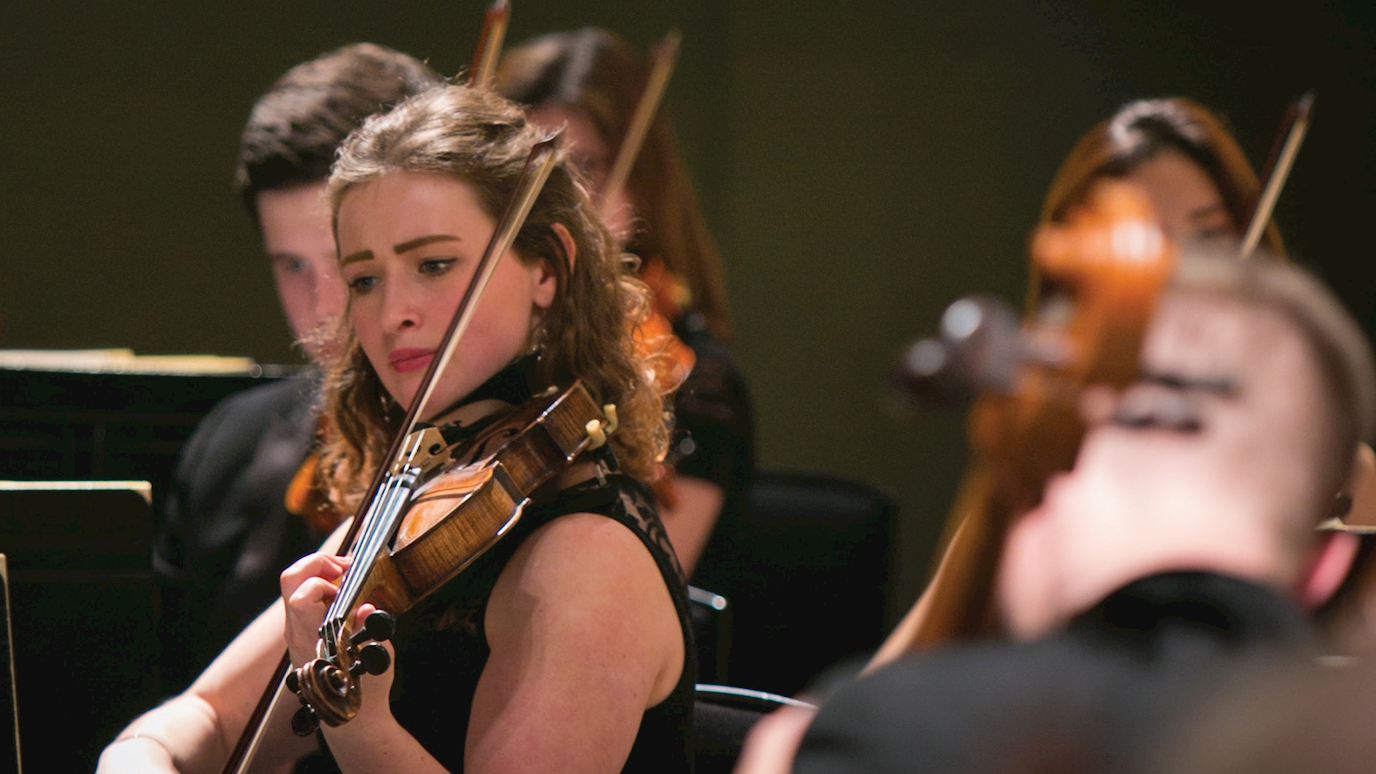
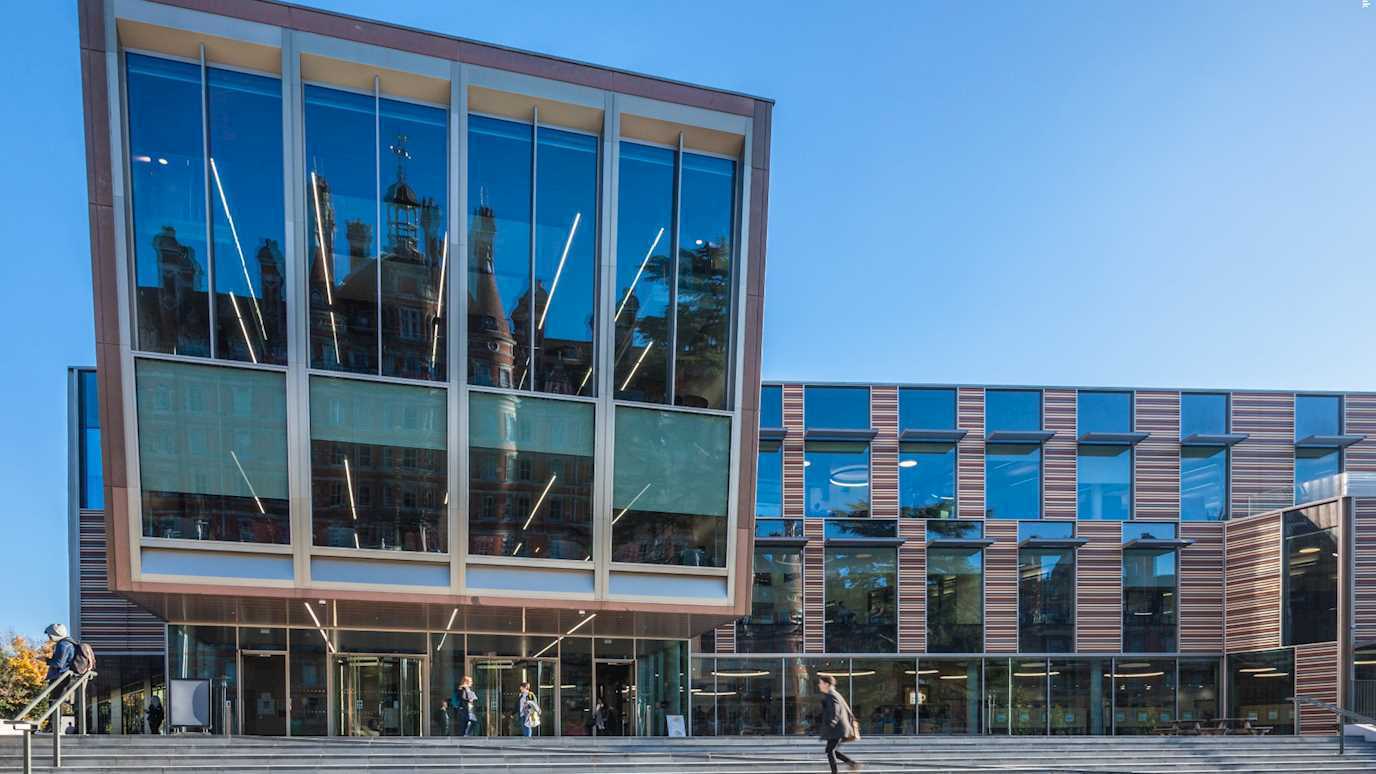
The Department of Music at Royal Holloway has a well-established national and international reputation in musical performance. It has nurtured the talents of musicians who have subsequently occupied a distinguished position in musical life both in the United Kingdom and abroad. The performance programme plays an integral role in the life of the Music Department. Our performance facilities are excellent, with a newly refurbished recital space in our main building and well-equipped and -appointed performance teaching and practice rooms elsewhere on campus. We also hold regular concerts in the University's magnificent Picture Gallery and the award-winning Windsor Building Auditorium which seats 400 people.
Studying performance
All undergraduate students at Royal Holloway encounter some elements of performance within their degree, although there is sufficient flexibility within the overall curriculum to interest both specialist and non-specialist performers.
Regular lessons with instrumental and vocal tutors are organised in conjunction with a series of lectures and practical seminars. A wide range of performance courses is available to second and third-year students. The Music Department also offers exciting opportunities to study practical applications of non-Western music.
At graduate level, we offer students a rich conspectus of academic and practical options in performance.
Composition
We believe being a composer today is about finding your individual voice, developing technical skills and a professional attitude, and finding the confidence to explore your own creativity. Royal Holloway offers a cohesive pathway allowing students to develop creatively and technically throughout the degree programme. A thorough and wide-ranging technical and practical foundation in acoustic composition is available to all first-year music undergraduates. In the second and third years a range of options is available for those wishing to further explore their compositional ideas. At graduate level there is a range of courses available in acoustic and studio composition whilst a large number of PhD composers create a thriving community for contemporary music within the Department.
Studio composition and music technology
At Royal Holloway studio composition and music technology is studied as part of a well-rounded undergraduate music degree. You can combine practical studio-based creative work with the academic study of media, film and TV music. Options are designed to provide a thorough grounding in studio techniques and a preparation for using the sort of technology found in the professional musical world after graduation. Study is geared primarily towards composing, particularly for media, film and TV, but also covers elements of recording, editing, sound design and experimental music.
Alumni
Many Royal Holloway graduates are now making careers as professional composers, including Tansy Davies, Richard Baker, KT Tunstall, Joby Talbot, Deirdre Gribbin, Michael Zev Gordon, Johnathan Cole and Paul Newland.
Further opportunities
Composers at Royal Holloway have their music played and recorded regularly by resident and visiting professional musicians, the New Music Collective and, of course, by fellow students. Our award-winning New Music Ensemble-in-Residence CHROMA provides unrivalled workshop and performance opportunities. Student composers are also invited to submit applications for the Picture Gallery Composer-in-Residence scheme among many other new music projects around campus.
Composition Competition
Are you a composer in years 10-13 and keen to have your music performed? Enter our new Composition Competition to have your piece sung by our Chapel Choir: https://royalholloway.ac.uk/research-and-teaching/departments-and-schools/music/studying-here/composition-competition
Ensemble-in-residence
Visiting ensembles
Composers’ Ensemble, Contemporary Consort, Fidelio Trio, Juice Vocal Trio, The Riot Ensemble
Ethnomusicology / Global Music Studies

Royal Holloway is a world-leading centre for Global Music Studies, and benefits from one of the highest concentrations of ethnomusicologists of any music department in the UK and a vibrant research culture. Staff research expertise at Royal Holloway spans an impressive regional compass that includes Asia, the Caribbean, Europe and Latin America.
We cover key aspects of the field ranging from a core commitment to ethnographic fieldwork and performance to perspectives on politics, gender, nationalism, identity, media, new media, indigeneity, intellectual property, popular music, diaspora, globalisation, neoliberalism, development and community music, to name just a few. Our team of researchers includes: Professor Tina K. Ramnarine, Dr Henry Stobart, Dr Shzr Ee Tan, and Professor Geoff Baker.
This rich research environment informs our dynamic Undergraduate and Postgraduate teaching programme.
At Masters level we offer a dedicated Ethnomusicology Pathway.
Undergraduates can choose from an exciting range of courses, which in any year may include Contemporary Debates in Music; Introduction to World Musics; Studies in Ethnomusicology; Studies in Music, Media and Technology; Music, Power and Politics; Intercultural Performance; Musics of China; Sibelius and the Music of Northern Europe; Orchestras around the World; Traditional Music of the Andes.
World Music performance options include an Andean Band and a Sundanese Gamelan, which can be studied for credit at undergraduate level, as well as an extracurricular Korean Drumming group and Balkan Ensemble.
These innovative courses can lead to a degree that focuses on ethnomusicology and world music, or they can provide stimulating perspectives to contextualise and complement the study of western art music, composition and performance.